FINE ARTS
Deemed Visionless
Contemporary art is a richly varied field in which professions and specialisations are constantly being redefined. This program is for holders of a Bachelor’s degree who are passionate about various aspects of this discipline – be it as an artistic practice or through a more theoretical, curatorial approach. This Master offers a unique opportunity to gain insider understanding of the contemporary art scene by experiencing its mechanisms as one of its fully-fledged actors.
In particular, students are invited to temporarily join an institution of their choice so as to study the latter’s procedures and people who gravitate around them. The results of this research may be presented in the form of an artwork, exhibition project or publication. In the framework of courses provided at ECAL's premises by renowned practitioners and theoreticians, students are involved in workshops, research work and exhibition development. They also have the benefit of ECAL's multidisciplinary course of lectures.
From pure artistic practice to exhibition curatorship, via writing, teaching or research, the range of opportunities is all the wider by creating an exceptional portfolio.
English
Master of Arts HES-SO in Fine Arts, major in Contemporary Art Ensemble (CAE)
4 semesters
120 ECTS
Open Space MA Visual Arts Printing, Lithography & Silk-screen Workshop


1/2


1/2
FINE ARTS
FINE ARTS
with Ricca
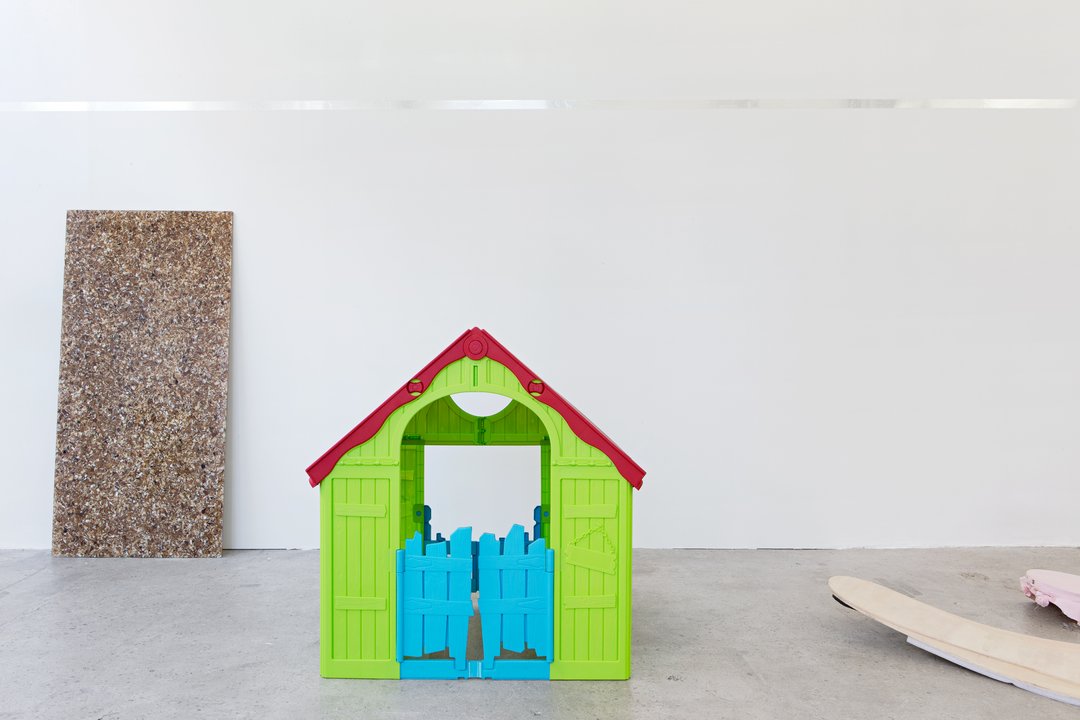
In his essay, Theory of Metamorphosis , philosopher Emanuele Coccia celebrates the “power of caterpillars” allowing them to transition from one existence to another without having to die first nor being born again. The caterpillar thus in its full autonomy shakes up the natural order of things. This in-between state materializes in the cocoon, an intermediate yet complete stage, totalizing more than the sum of two halves. The cocoon is a circumscribed territory which has no limits, not completely life, not totally death. This solipsistic space is plural, it is host to the liquid form, embracing simultaneity and different realities. The artworks presented here echo the principle of transition which govern this exhibition. Through their relationship to space or how they question the function of an art object, through the staging of intimacy, these works identify a limit and almost mechanically, ask what lies beyond. Usefulless is a quality specific to useful objects that are nowhere to be found when needed. Opening a middle way through the binary definition useful/useless , the term usefulless defines a transitional state of utility. Here inside the exhibition, the influence of context reveals the intrinsic ambivalence of objects, useful only based on a need, at a given time, for something or to someone. Usefulless opens a dialogue between the works of the students of the Master Fine Arts at ECAL/University of Art and Design Lausanne and pieces from artists whose respective practices explore similar avenues.
FINE ARTS
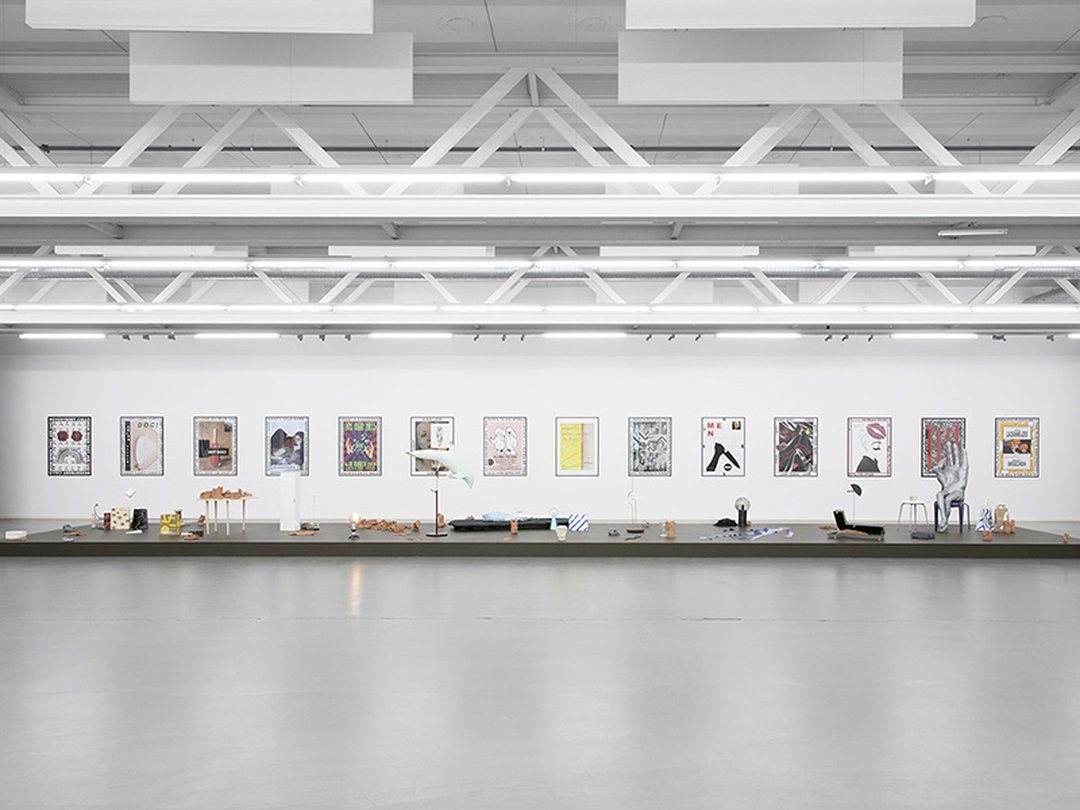
KILL Yr IDOLS The 20th century invented youth. It has inspired the century in all matters, it has become its horizon. We move forward according to its tastes. Until the end of the World War II, youth was thus only rarely considered, as if in a transitory state, stuck in an awkward age. Then, all of a sudden, with the rise of pop culture, the market economy started to seduce it. A phenomenon that was long regarded as an embarrassing growth spurt ended up dominating the world. The 21th century is nineteen, twenty years old. And youth still remains a mystery. One relishes to conceptualize and historicize it. One also knows that youth never stops to toss and turn. It exists in order to produce moments, ideas (immediately subjected to aging), new gestures, or which youth believes to be new? Amnesiacs are the content ones. One must see how the history of youth has been sketched in the last century, as a straight line, or maybe in successive layers, strata, sedimentations. Less than a century has produced a tome of attitudes that describe each and every generation, the way they took possession of the cultural field, of trends, languages, postures and all theses signs that aim to destroy the next generation (in order to provide new space for the possible). Invariants stand in the midst of all this nonetheless: the same doubts, rage, opposition, unease, fake arrogance, discoveries and the same gold. Politicized, or at least concerned, youth 2.0 is soaked in a yet to be analyzed opposition between the speed rate of its exchanges that it constantly develops further and a desire to tame late capitalism's irrevocable damages: the disintegration of the planet and its climate. Outpacing capitalist realism might well have become the new horizon of a youth that was formed by its very capabilities of speed. In this setup, what are the new postures, ideas, excesses and transformations that are – again and again – capable of inventing youth? How will the new emerge if we remain at the core of an exhausting recommencement ? Philippe Azoury
FINE ARTS
with MAAV
FINE ARTS
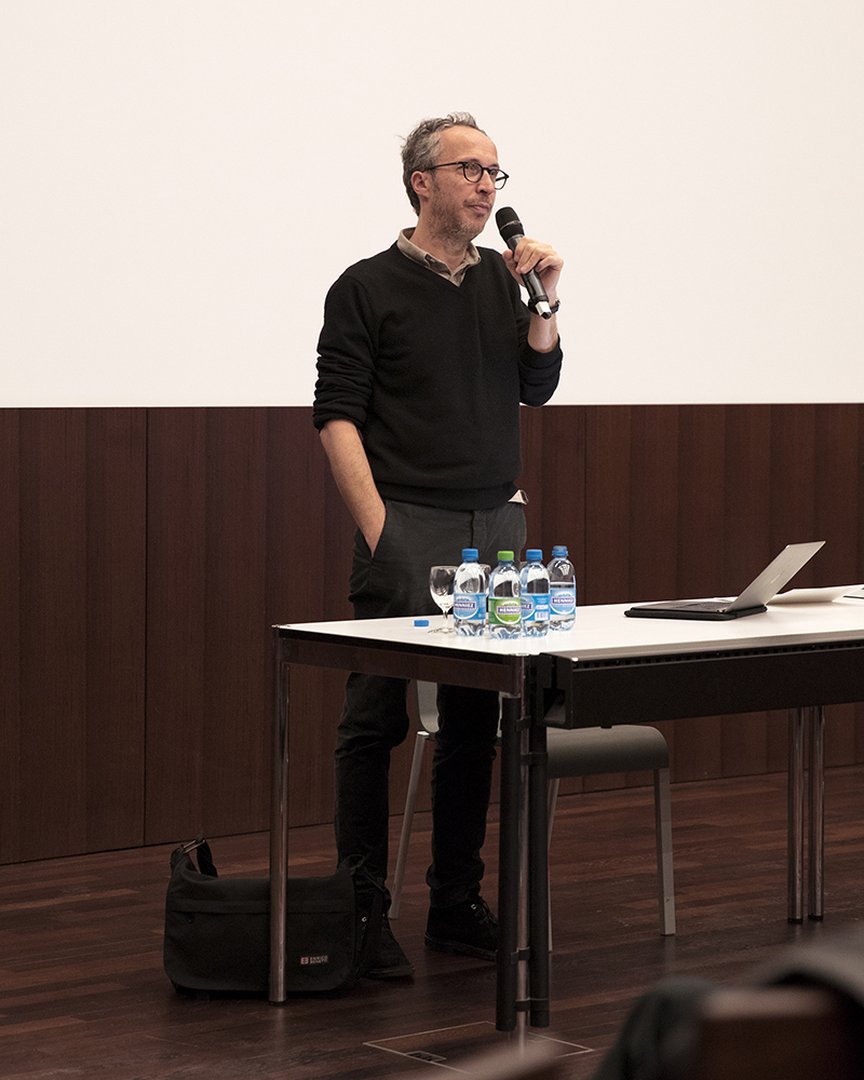
Can we move from one world to another, from one period of human history to another, and still create forms, produce meaning, sell art, as if nothing had happened? To slip into a new era without taking it into account? Between the countdown of the ecological catastrophe and the new environmental conscience, we are in the process of changing paradigm, and of entering, without always knowing it, often backwards, in an unknown universe, where the political, social, scientific, artistic questions are no longer posed in the same terms. Where was the man ("ecce homo") is imposed today the interdependence of the forms of life ("to like the echo?"). Where Prometheus was unleashed, with his myth of progress and his dogma of development, a new concern arises, still badly understood, that of lasting, of letting live, of abstaining. Where substance reigns, that of products, resources, certainties, a new question now insinuates itself: the atmosphere, a matter of ambiance and resonance, of airy spirits and the bewitchment of things. And where anthropocentrism triumphed for a long time, as an imperial posture, the ground is cracking under the feet of Man, who loses his capital letter, his arrogance, his solitude too. Of this obliged ecological turn of the late modernity, the art and the culture cannot not take account. They must find a new tone, in tune with the perils, the urgencies, but also the humility and the breadth of vision required by these new times. They must explore new themes, which frenetic capitalism and the dramas of history had relegated to the background. Above all, they need to think together things that have been separated for centuries: objects and lives, air and meaning, micro and macro, time and space. It is these vast problems that the symposium will address. It is in this spirit that it will shake up our habits. It is with as much joy as questioning, with freedom as with open dialogue, that it will tackle head on the revolution in progress, and its crucial stakes for the art world - and for the simple fact of creating. We will talk about the Anthropocene, green finance, vital decay, militant slush, the relationship between the environment and the extremities, and many other things. Keeping in mind, in order not to disarm, that it is not a question of defending nature, but rather, today more than ever, of being the nature that defends itself.
FINE ARTS
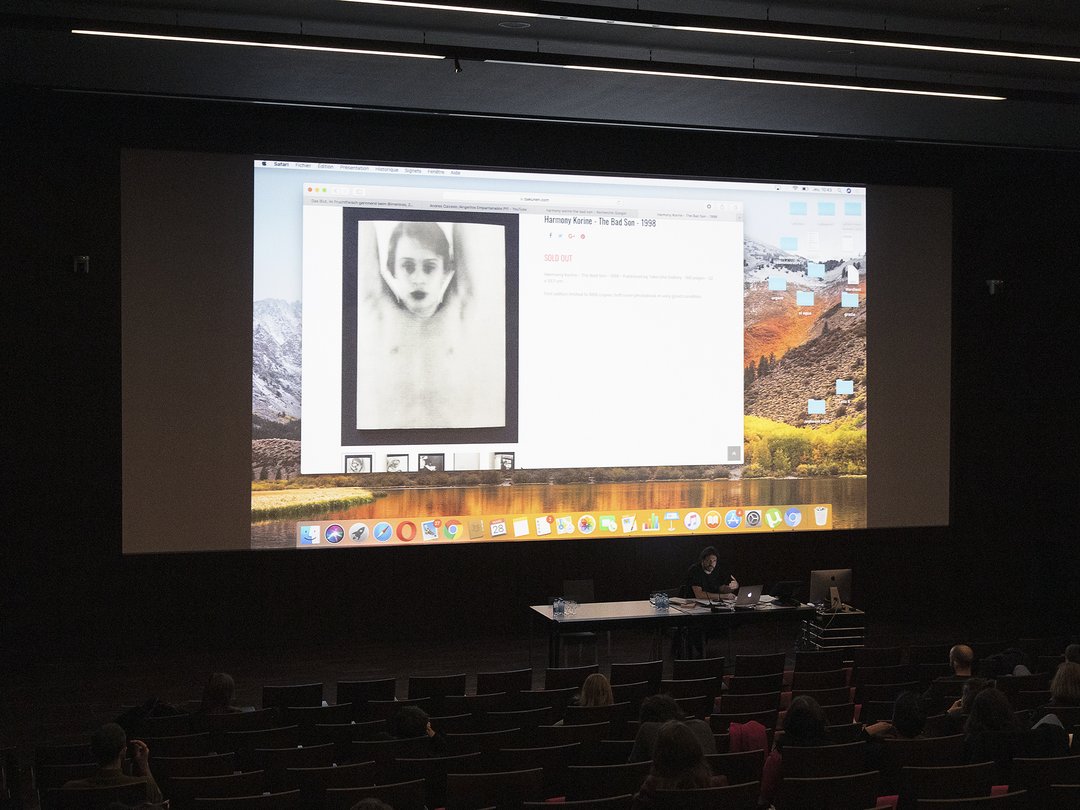
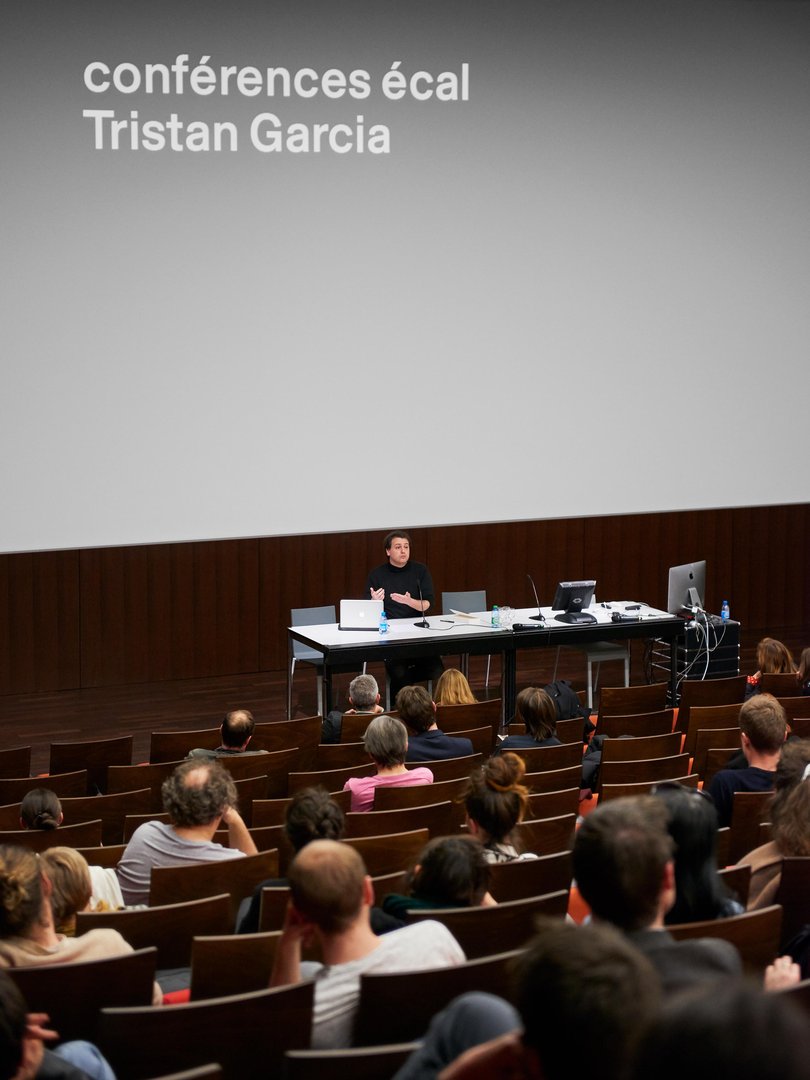
A l’occasion du Symposium Master Arts Visuels à l’ECAL, Tristan Garcia a réalisé une conférence sur son livre Nous. Né en 1981 à Toulouse, Tristan Garcia est un philosophe et écrivain français, qui s’impose parmi les plus intéressants de sa génération. Il co-dirige avec Vincent Normand le laboratoire de recherche Théâtre, jardin, bestiaire : une histoire matérialiste de l’exposition, soutenu par l’ECAL et la HES-SO. Ses romans comprennent La Meilleure Part des hommes (2008) qui a obtenu le Prix de Flore en 2008 et qui fut adapté au théâtre en 2012, Mémoires de la jungle (2010), En l’absence de classement final (2012), Les Cordelettes de Browser (2012), Faber. Le Destructeur (2013) et 7 récompensé par le prix du Livre Inter 2016. Ses travaux philosophiques incluent L’Image (2007), Nous, Animaux et Humains. Actualité de Jeremy Bentham (2011), Forme et objet. Un Traité des choses (2011), Six Feet Under. Nos vies sans destin (2012), La Vie intense. Une obsession moderne (2016) et Nous (2016). Depuis 2015, il est professeur associé à l’Université Lyon-3.
FINE ARTS
FINE ARTS
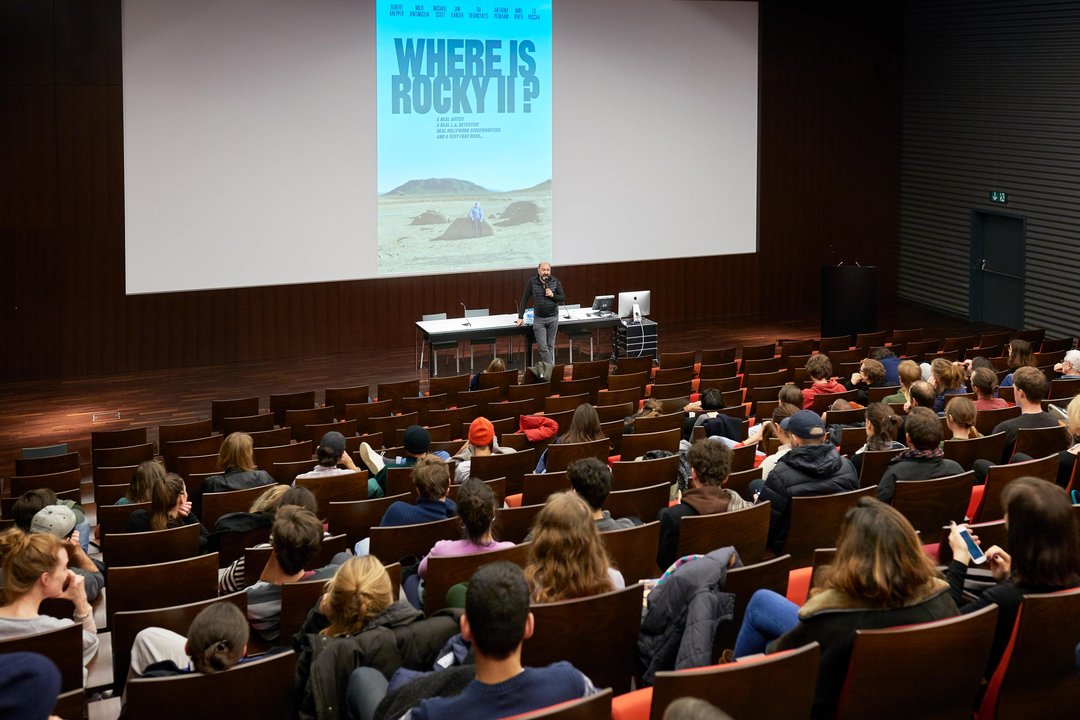
Pierre Bismuth a présenté à l’ECAL son premier long métrage en tant que réalisateur Where is Rocky II ? Né à Neuilly-sur-Seine en 1963, Pierre Bismuth est un artiste contemporain qui s’intéresse à la règle comme manifestation essentielle de l’activité humaine. Son travail, qui couvre des champs de connaissance très divers, se nourrit des lois inhérentes de chaque système auquel il s’intéresse, dans le but de trouver leur point de rupture. En 2005, il remporte avec Michel Gondry et Charlie Kaufman l’Oscar du meilleur scénario original pour son synopsis de Eternal Sunshine of the Spotless Mind . Where is Rocky II ? (93') 2016 Un détective privé et un duo de scénaristes hollywoodiens sont engagés dans un défi autour de l’existence d’un mystérieux objet créé et caché dans le désert, il y a 40 ans, par l’artiste américain Ed Ruscha. En traitant la matière documentaire comme s’il s’agissait d’une fiction, Pierre Bismuth réalise ce qu’il appelle une fausse-fiction.
FINE ARTS
Lors de la cérémonie des diplômes Bachelor et Master qui a eu lieu fin juin, l'ECAL/Ecole cantonale d'art de Lausanne a remis à trois étudiants de 1re et 2e années du Master Arts Visuels – Gabriele Garavaglia, Vinzenz Meyner et Catarina Bota Lea – les «clés» d'une résidence d'artistes à Mexico City. SOMA est un espace d'art contemporain qui vise à s'imposer comme un contrepoint dynamique aux écoles, musées et galeries du Mexique. Il est né à l'initiative d'un groupe d'artistes mexicains qui, en s'appuyant sur les expériences des précédentes espaces d'art, comme La Panadería et Temístoclés 44, ont uni leurs forces pour créer une plateforme unique au sein de la scène culturelle. La mission de SOMA est d'encourager le dialogue, la collaboration et même la confrontation entre artistes et producteurs culturels de différents horizons et générations.
FINE ARTS
FINE ARTS
FINE ARTS
Jérôme Wilfredo Baccaglio , Logos for Drones and Such... I created a catalogue for drone logos. It gathers a heterogenous iconography (invented, drawn, found) whose every motif is available for purchase as a canvas, a tattoo, a drawing or a sticker. This is an oblique strategy adopted to talk about the interpretation of an image (as the spectator, or as the artist, to assign it a meaning, a name); the versus created by hand-made work and a digital image; mercantilism; the matter of copyright and its role in an information-infested era. Tina Braegger, Fasanenstrasse 30 I made an architectural model of white cardboard, placed on four white metal legs. I decorated the model with white curtains that flow over the model down to the floor. Inside the model, I put old toys of mine, objects that originally belong to a doll’s house. By attaching the legs directly to the model, it looks like a table. I wanted to create something surreal, like a dream; the objects inside the model are slightly too big, and the model bleeds off as the curtains overflow. Arthur Fouray , Andy IV, #aaafff Studio Modernes, Helio noir cendré 2011: Enters 2nd year ECAL. Dia: Beacon visit. 2012: First artist exchange with Frédéric Gabioud. 2013: Begins the notes website "arthurfouray.website. » Fine Arts Bachelor's degree. Obtains a studio funded by the city of Lausanne. Assistant to Pierre Huyghe . Co-founding of a + o - ( a-plus-o-min.us ). 2013 - 2014: The Lauren bedspring-painting inaugurates the objects-canvases series. #aaafff first painting for Philippe Decrauzat. 2015: Co-founding of Silicon Malley ( siliconmalley.ch ), artist-run space in Prilly. Julien Gremaud , The Big Picture Two wallpapers face each other. They are very white, their black lines are basic. The templates have been done. It was questioned whether the surfaces should be solid or empty, filled with monochromy or blocks of primary colour. One can always enlarge them if necessary. These are ai files. One no longer needs a Hasselblad camera. There is not a whole lot left of the source image. By the way: photography wants to appropriate space. But we are still unable to do so. Eventually, the finishings, very weighty. I promise you Johanne, I will take some pictures for our collaboration’s archives. Emanuele Marcuccio , Untitled (Serve the Servants) This is a partial truth, a fragment of my understanding, my sense of things. Being alone in the office, being alone in the library, being alone in the studio is still about a certain notion of improving. I have this impulse that pushes me right in the situation that makes me improve. Well then, I feel specially special. Photo credit : ECAL/Axel Crettenand.
FINE ARTS
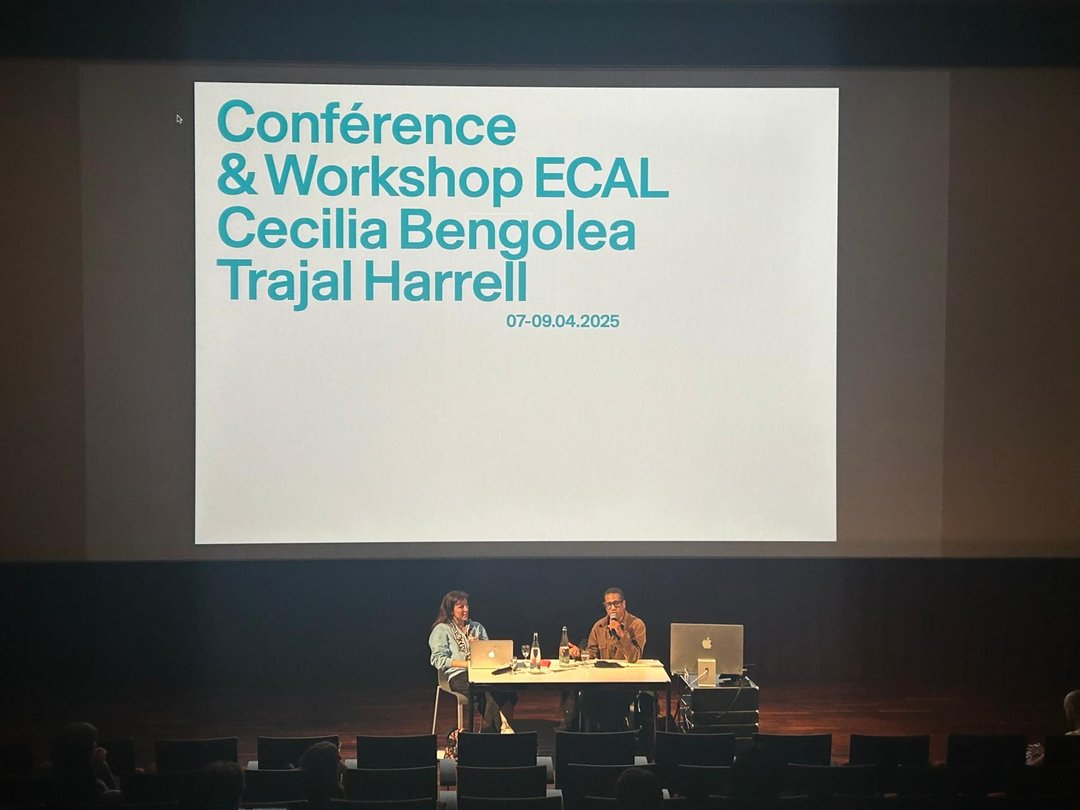
with Stéphanie Moisdon, Shirin Yousefi
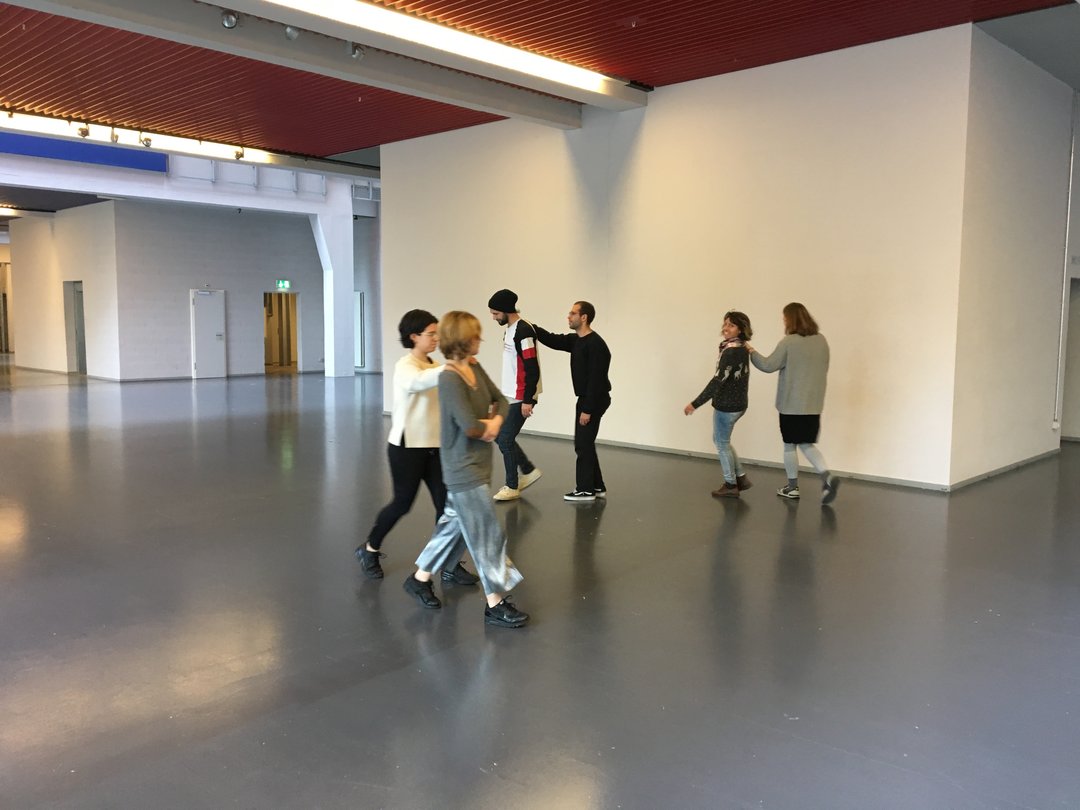
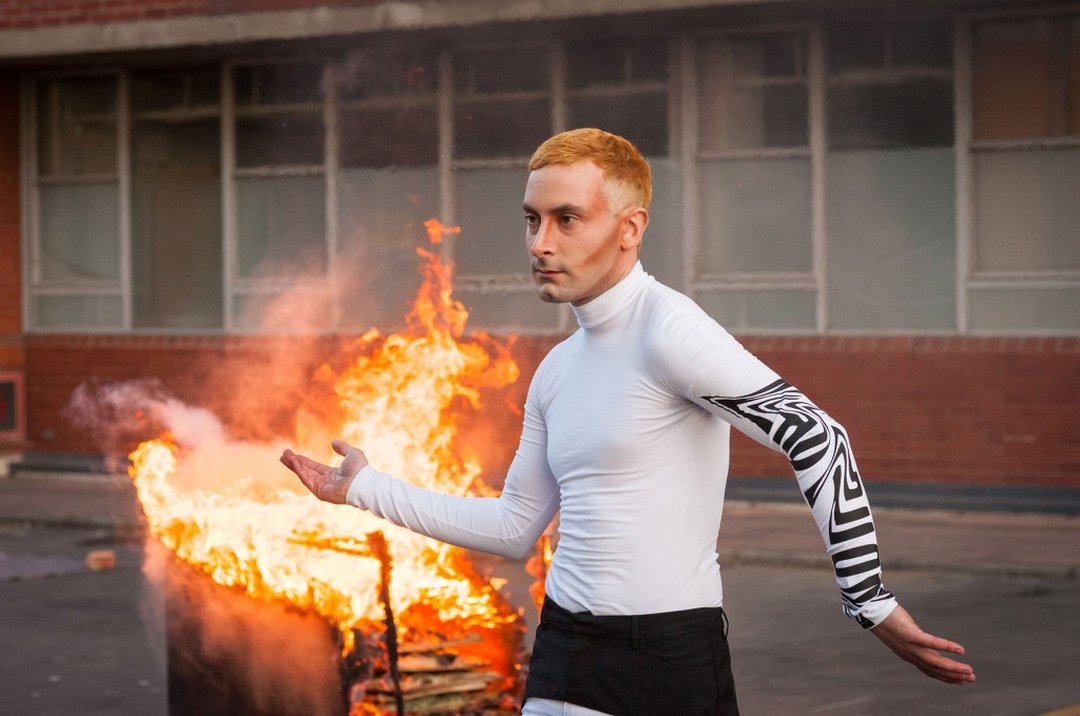
In practice, Trajal Harrell will introduce participants to runway categories and dance techniques, guiding them through warm-up exercises and curated music playlists that shape his artistic approach. Meanwhile, Cecilia Bengolea will explore the concepts of self-presentation and performativity, inviting participants to engage in a dynamic investigation of identity, whether real or constructed. Through movement and expression, she aims to question the fluidity of identity and the ways in which it can be shaped or reimagined in a performative context.
FINE ARTS
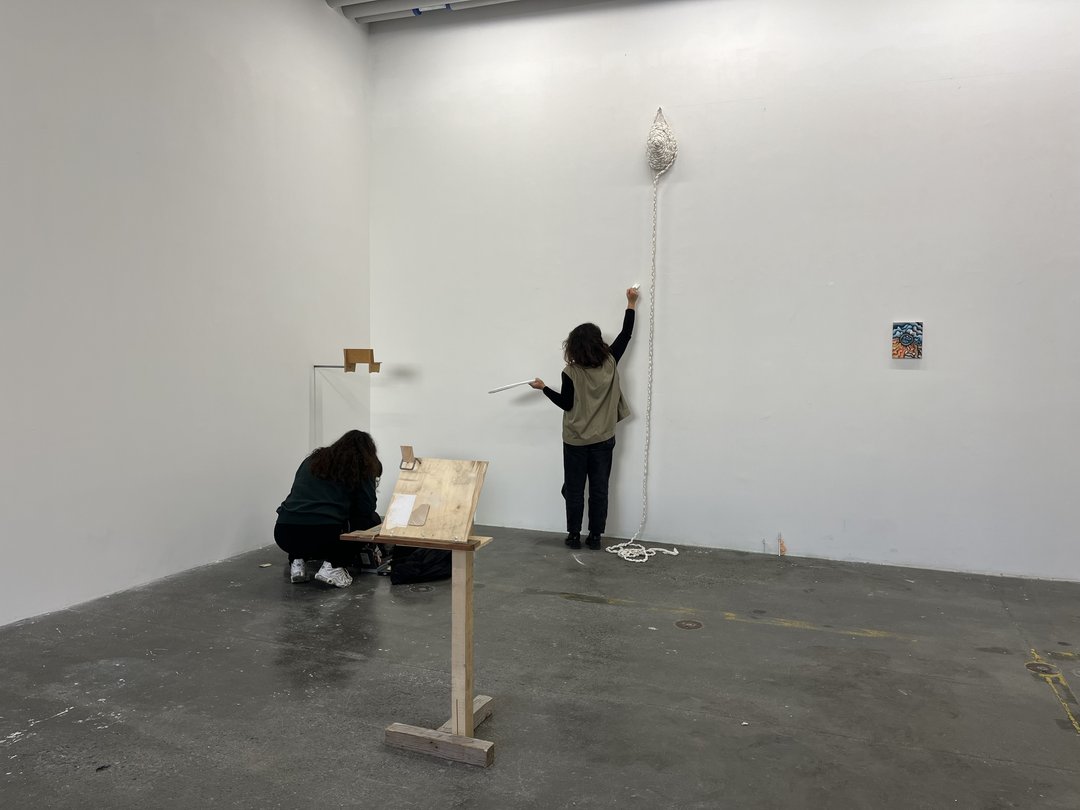
with Stéphanie Moisdon, Shirin Yousefi
The POOL workshop focuses on interdisciplinary practices and involves a wide variety of mediums. Its core is rooted in the ideas of sculpture and painting, as seen in the work of Mathis Altmann and Vittorio Brodmann. The two artists explore techniques for embedding narrative structures, highlighting representational elements while investigating how abstraction can lead to distortion, the grotesque, and the fantastical.
FINE ARTS
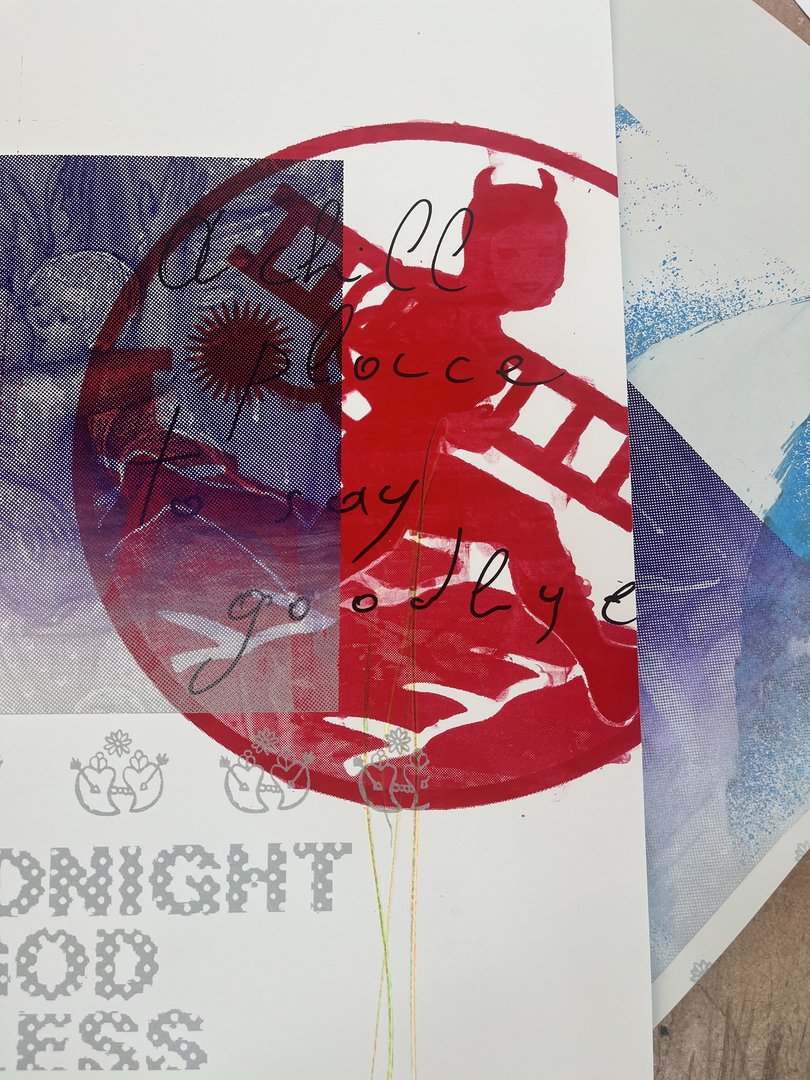
with David Douard
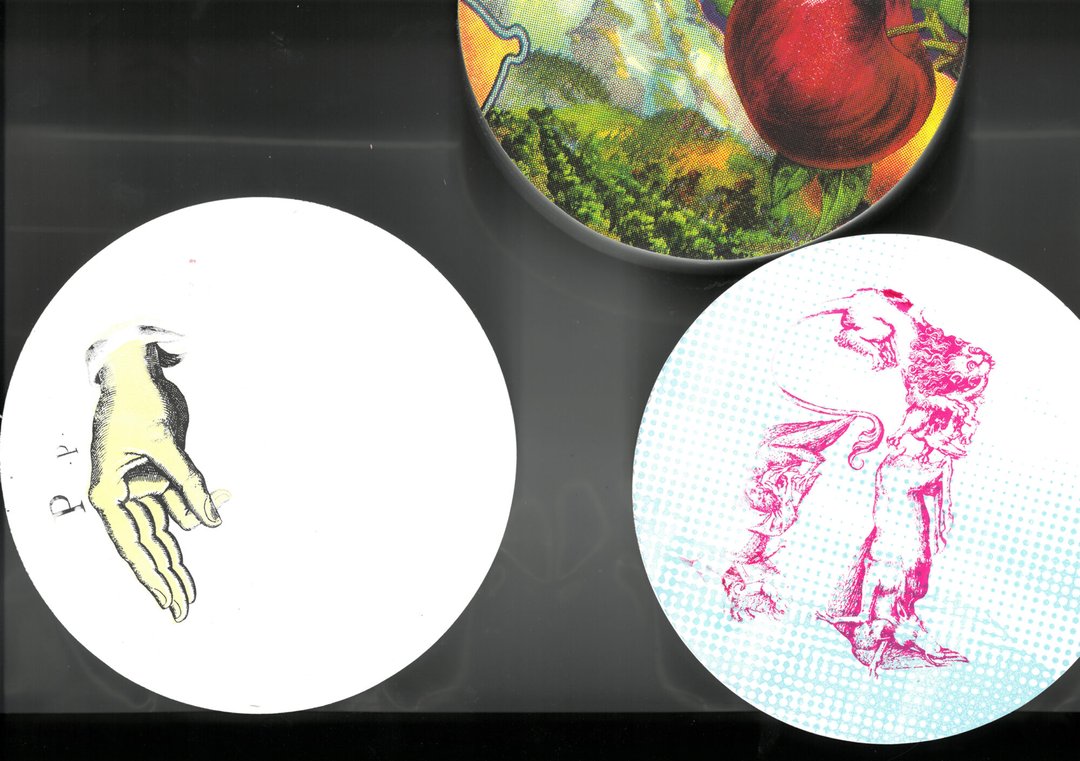
Questionner l’économie des images et l’idée d’authorship à travers un exercice de manipulations d’images digitales vers un objet physique. Remettre en question le rapport d’une génération artistique « Google » qui se servait volontiers dans un gouffre d’image internet pour les manipuler à foison. Aujourd’hui ce rapport est contesté par de nouvelles technologies servant et à donner une valeur et une authenticité au détournement ( NFT ) David Douard propose ainsi un workshop de sérigraphie sur 3 jours comme un moment de jouissance productive où les enjeux seraient l’appropriation par la superposition. C’est une réflexion sur l’image à capturer et sur la potentialité subjective d’une image à travers le rapport au texte, la poésie ou le langage.
FINE ARTS
with Matthew Lutz Kinoy, Natsuko Uchino
FINE ARTS
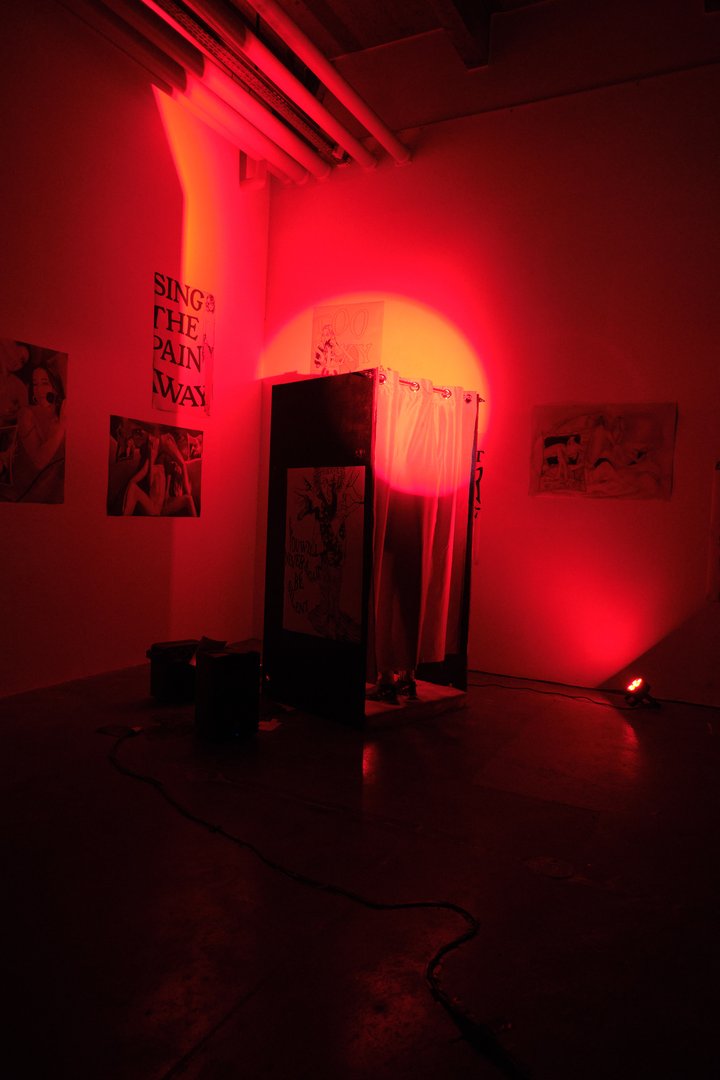
with Neil Beloufa
FINE ARTS
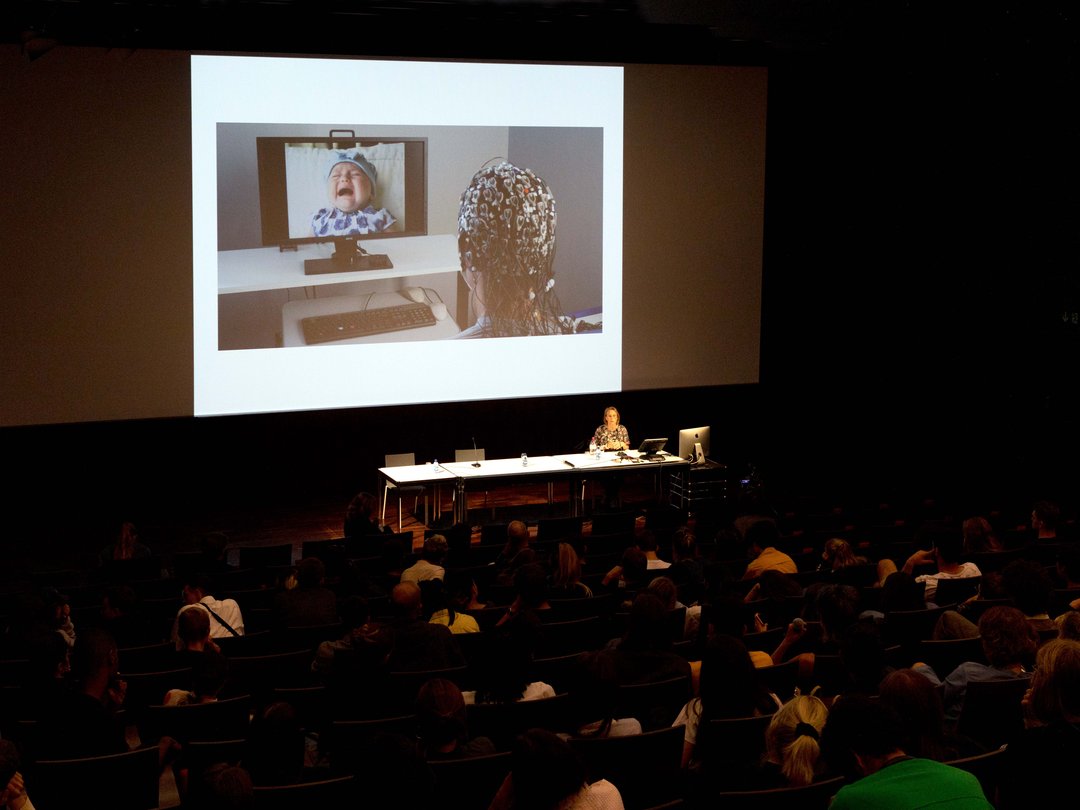
with Neil Beloufa
FINE ARTS
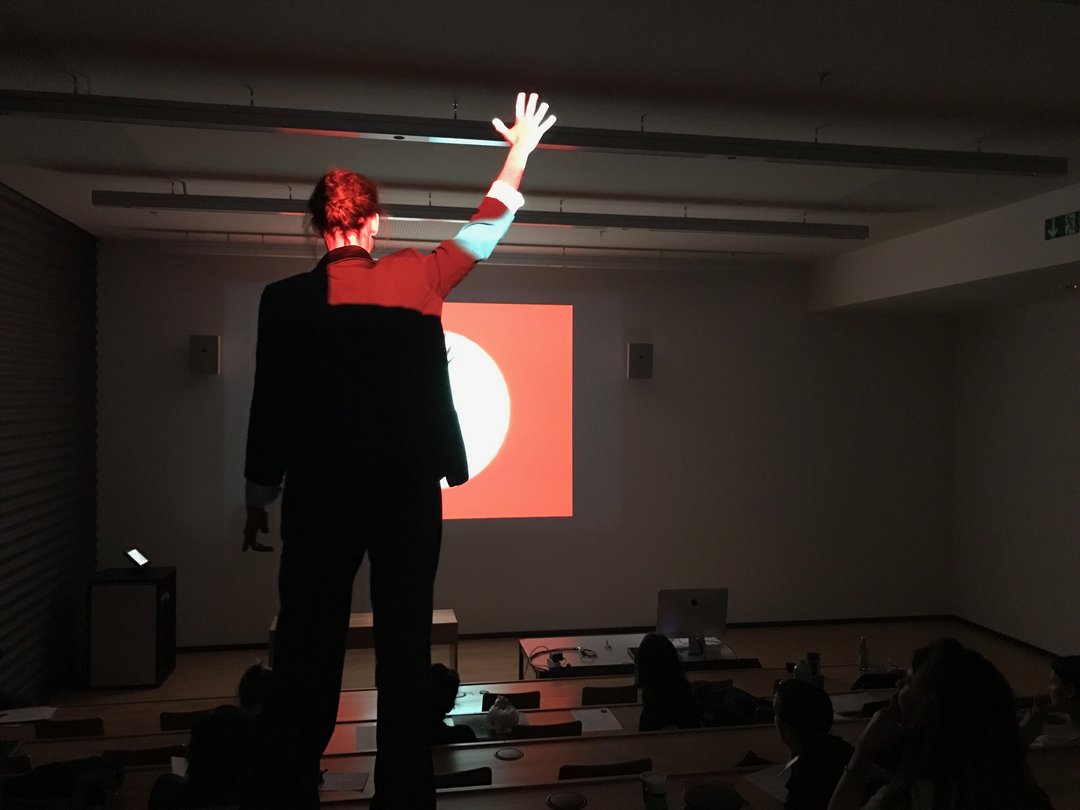
Camille Henrot, Plasticienne, New York www.camillehenrot.fr Née en 1978, Camille Henrot vit et travaille à New York. L’artiste française développe une pratique variée qui mêle film, dessin, sculpture et installation. En puisant ses inspirations et ses sujets dans la vie quotidienne et dans la littérature, la mythologie, le cinéma et l’anthropologie, l’oeuvre de Camille Henrot reconsidère avec acuité les typologies d’objets et les systèmes de pensées établis. En 2013, dans le cadre de la Smithsonian résidence à Washington DC, elle réalise le film Grosse Fatigue , avec lequel elle remporte le Lion d’argent à la Biennale de Venise. Lauréate du Prix Nam June Paik 2014 et du Edvard Munch Art Award 2015, Camille Henrot a également participé aux Biennales de Lyon, Berlin et Sydney et a bénéficié d’expositions personnelles dans des lieux prestigieux tels que le Schinkel Pavillon à Berlin, la Kunsthalle de Vienne, le New Museum à New York ou encore au Palais de Tokyo à Paris pour une carte blanche en 2017. Ses prochaines expositions majeures auront lieu à Tokyo Opera City Art Gallery (2019) et à la National Gallery of Victoria de Melbourne (2020).
FINE ARTS
Avec ce workshop, Dominique Gonzalez-Foerster prolonge sa réflexion sur les apparitions et les transfomations qu’elle pratique depuis 2012 (M.2062 et QM.15) autour du cinema, de l’opéra et de la littérature avec des personnages réels ou fictionnels qui représentent chacun un point de vue sur l’art, la représentation et l’existence. Dominique Gonzalez-Foerster (born in 1965) is a French artist and an in influential figure in international contemporary art. She is known for her great variety of work in video projection, photography, and spatial installations. Recent solo exhibitions include “1887–2058” at Centre Pompidou, Paris and K.20 in Dusseldorf (2015/2016), “Temporama” at Mam, Rio de Janeiro (2015), “Splendide Hotel” at the Palacio de Cristal/Museo Reina Sofia in Madrid (2014), “Chronotopes and Dioramas” at the Dia Art Foundation, New York (2009); “TH.2058” in the Turbine Hall, Tate Modern, London (2008). She also participated in Skulptur Projekte Münster (2007) and Documenta XI, Kassel (2002). Dominique Gonzalez-Foerster has also staged “M.2062” in London, Amsterdam, Dublin, Kyoto and Paris between 2012 and 2014, and QM.16 in Paris in 2016. Her most recent films are “Otello 1887”, “Vera and Mr Hyde” and “Lola Montez in Berlin”.
FINE ARTS
Georgia Sagri
FINE ARTS
FINE ARTS
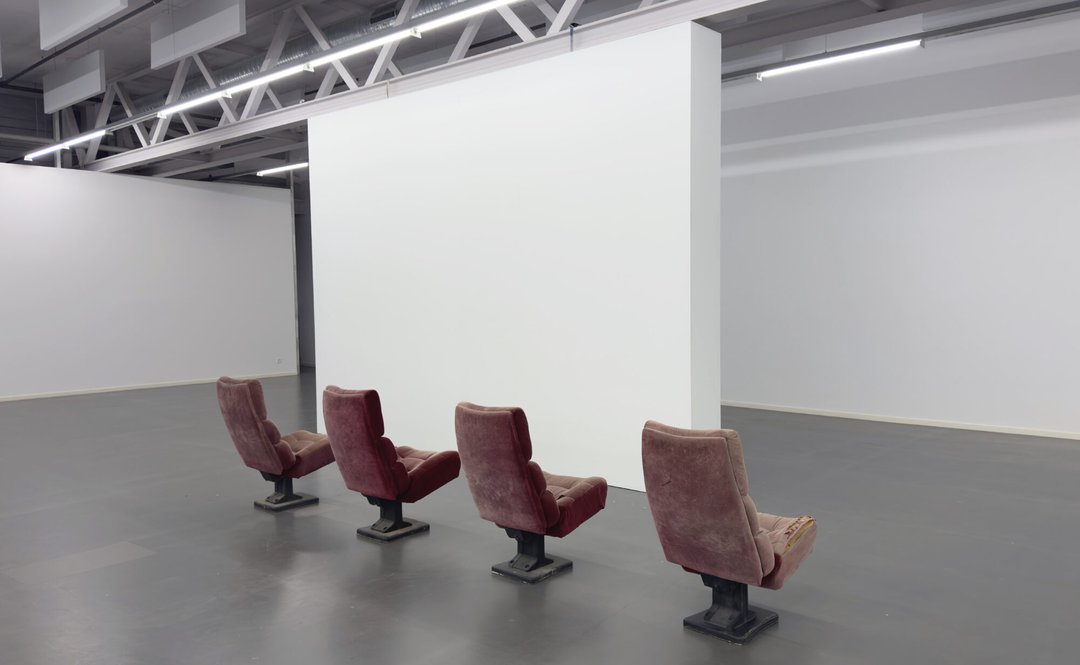
by Charly Mirambeau
Seats from the erotic cinema Le Moderne, wall, 5.6 mm hole, magnet-mounted photograph on steel plate with oak frame. There is no memorial for the person killed or for the two people injured in the far-right homophobic terrorist attack that took place on February 19, 2002, at the erotic cinema Le Moderne, located on Avenue William-Fraisse 2 in Lausanne, Switzerland.
FINE ARTS
by Matthias Reclus
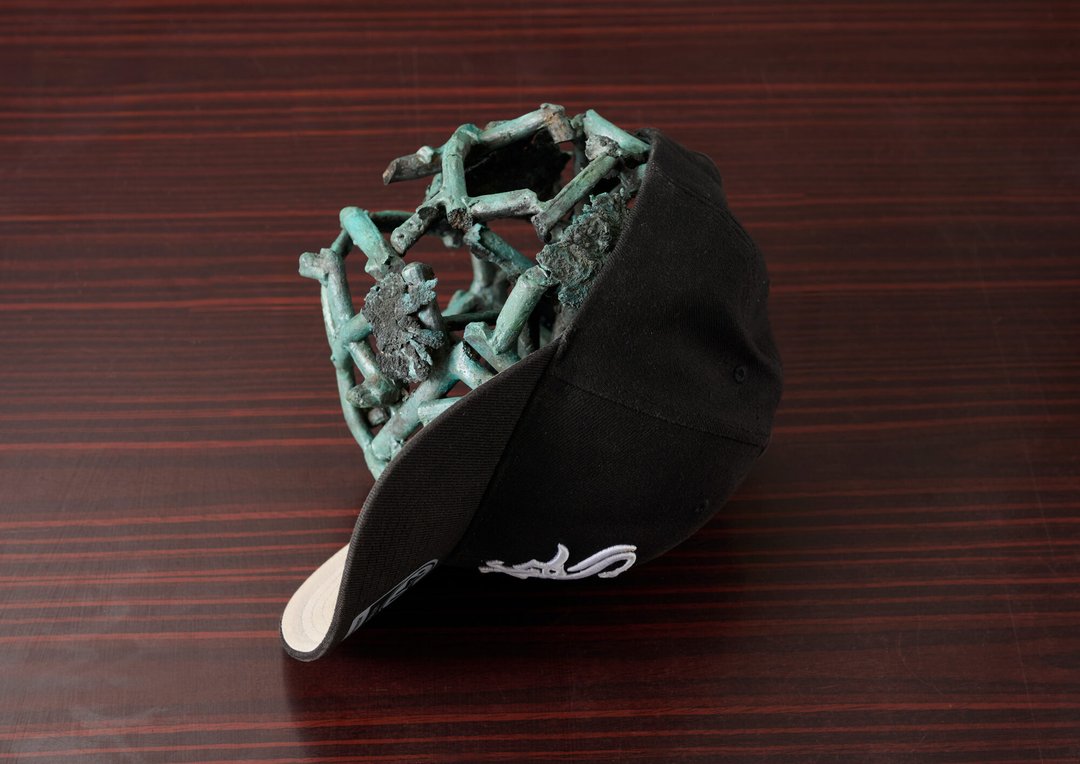
"they send you home with a bag full of yarn it's good therapy they say make something out of it months later when the ice breaks up in the bay and you reopen the sun porch it turns out to be a soft woollen purple and black thing a thing to wrap around you when you're cold when you're trying to warm up to the fact that this has got to stop the crocheting the crochety behavior hooking unravelling" "Vanity Shades", Mary Howes, 1990
FINE ARTS
by Gaia Del Santo
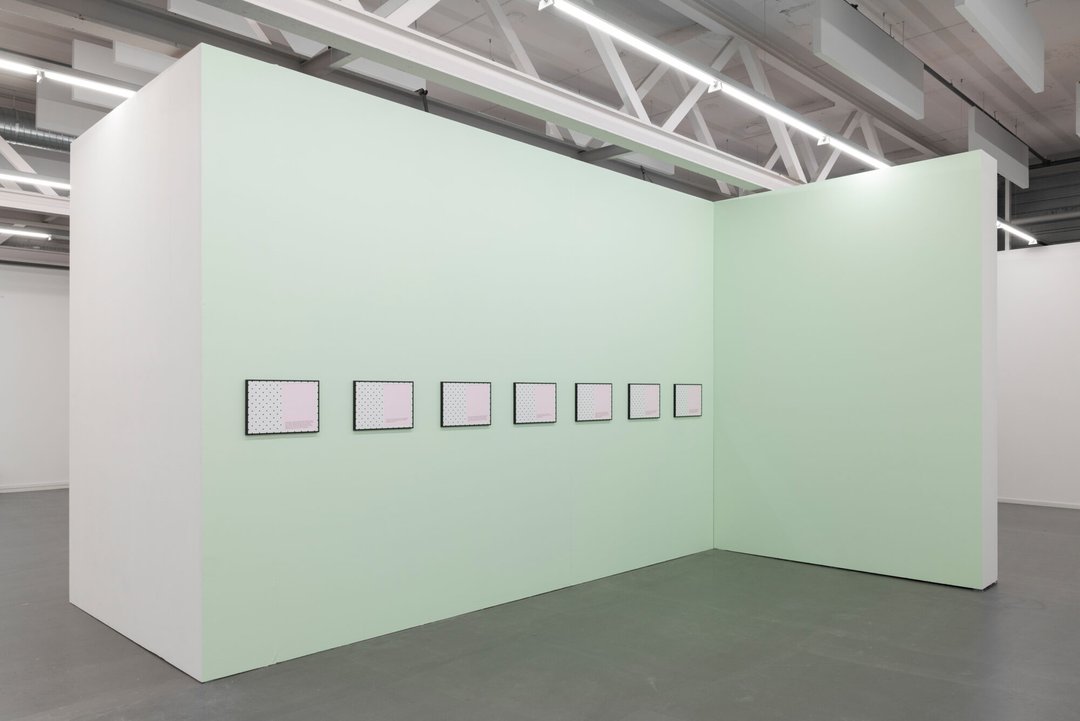
nothing happens in the absence of repetition is a series of works centered on quotes taken from press releases and exhibition texts for shows or works the artist saw over the course of their Master's degree. This series takes place within a research on how the necessity of branding under platform capitalism is accelerating the standardization of self-expression, and how this manifests in the arts, where the commercial ties of this indispensable tool are decried and denied. The citations were selected based on their ability to describe the artist's overall practice or a particular work of theirs. Through this selection, this project probes a double-bind: the expectation of an artist's indisputable originality and their need to locate themselves within a legible lineage.
FINE ARTS
by Asia Lapai
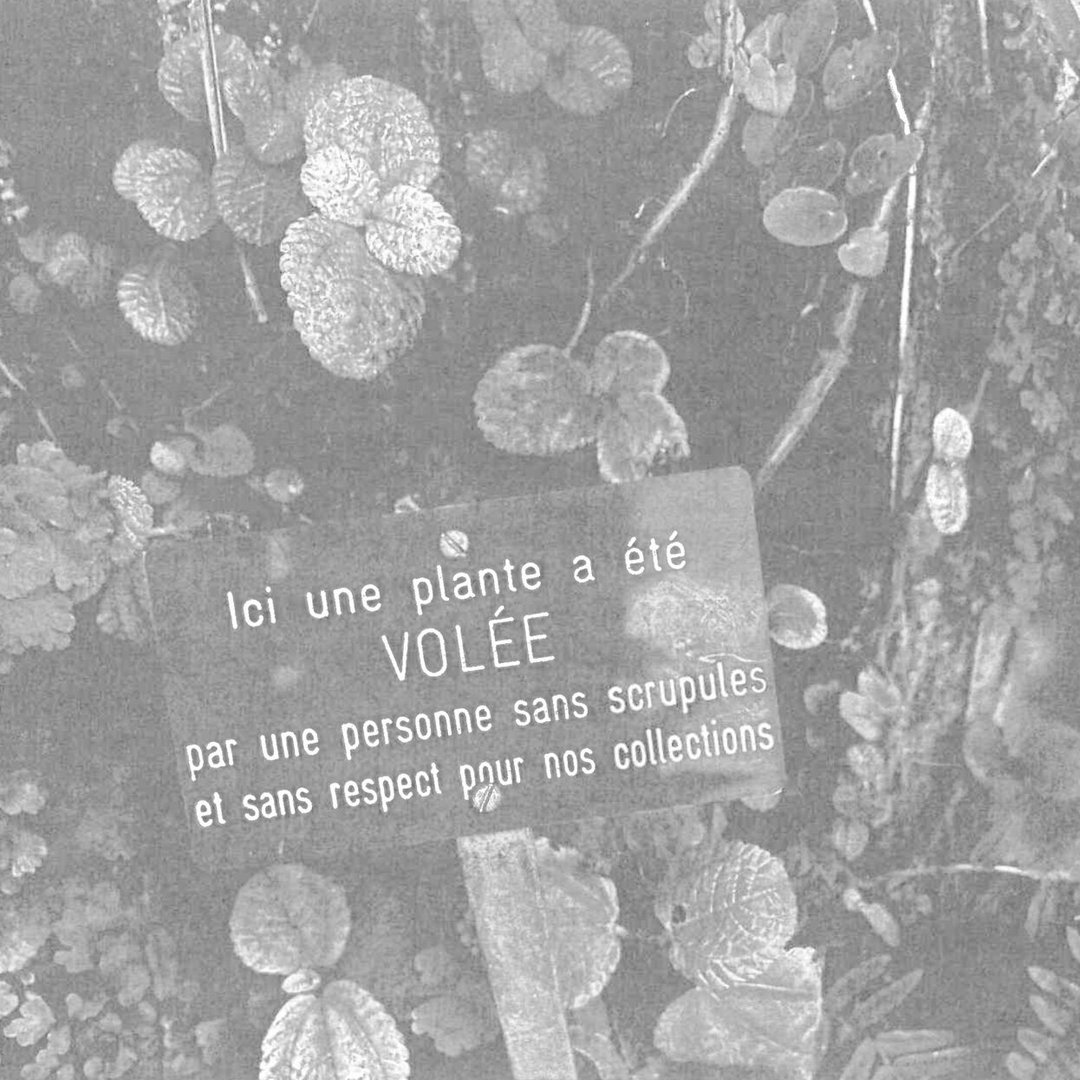
"THIS PLANT HAS BEEN STOLEN BY A PERSON WITHOUT SCRUPLES AND WITHOUT RESPECT FOR OUR COLLECTION" is a sentence taken from the signs in the greenhouse of the Geneva Botanical Garden, added when a plant goes missing. It opens a reflection on exoticism as a production of narratives and power relations, structured by the opposition between "here" and "elsewhere". Little Chewy is a meeting with a dock worker from Liverpool, a former major port of the transatlantic slave trade. These fragments give rise to contradictory or revised narratives, maintained in opacity. This project questions desire, power, and representation, as well as the colonial shaping of spaces and its lasting effects on living beings, through the hypothesis of a necro-aesthetic regime.
FINE ARTS
by Marta Morandini
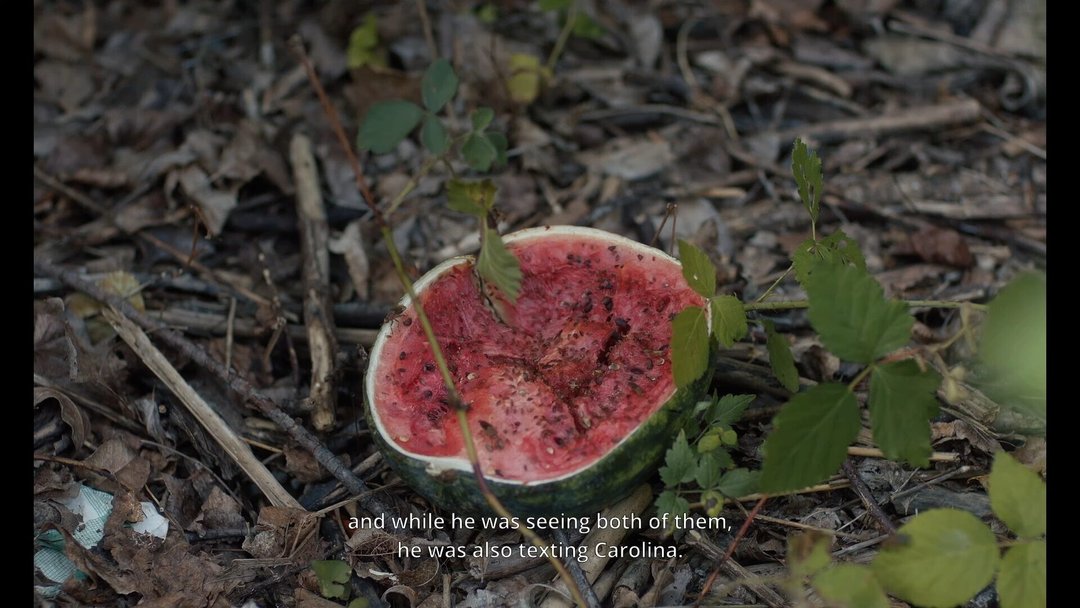
Sponde is a film that dwells on the passage between the end of childhood and the beginning of adolescence of three friends during a summer's day. The girls part from their friends and the crowded beach and set out along the banks of the river. The landscape gradually opens up, human voices give way to the sounds of nature and the animals that inhabit the river. In this silence, a vision of a metamorphosis of bodies and landscape unfolds in a unique symbiosis. As evening falls, one of them is seized by an inexplicable stirring of the soul and turns back, without warning her friends who have fallen asleep on the rocks. The other two, upon waking, continue walking in the direction of the water, becoming small figures lost on the horizon.
FINE ARTS
by Matteo Pizzolante
Based on the reiteration and development of seemingly simple combinations and alterations, make room for the miracle explores everyday matters, traditional techniques, and recycled objects stemming from ordinary actions. Pushed beyond their own form, these elements set the rhythm of a production driven by a contradictory and ubiquitous aesthetic flow that never allows itself to be fully fixed and remains exposed to continuous deviations. Inputs coming from multiple directions chase one another, overlap, and hybridize. Rather than offering a synthesis, the works attempt to stage a tension: that between the desire to inhabit multiple worlds simultaneously and the impossibility of fully belonging to any single one. It is in this friction that space shifts, expands, and cracks.
FINE ARTS
by Iulia Bucuresteanu
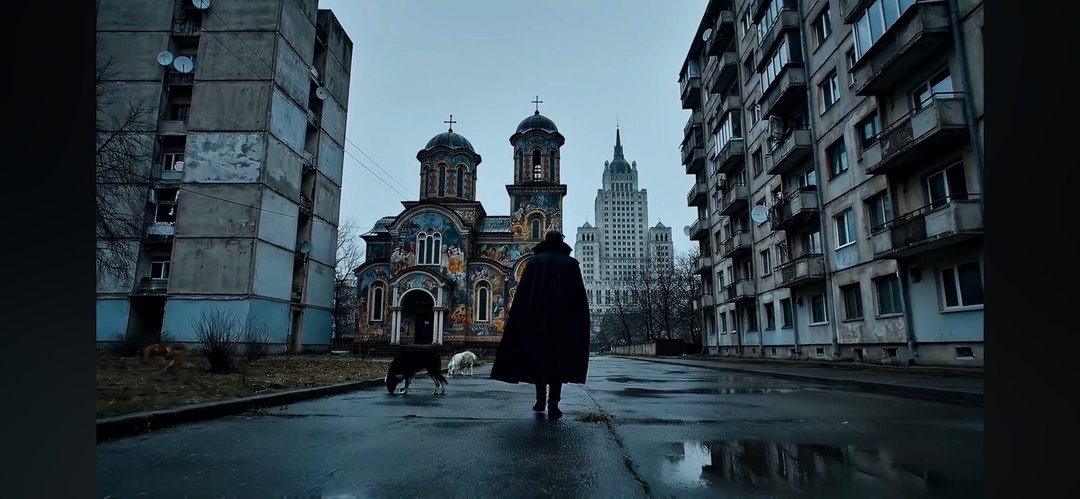
Somewhere in Draculaland explores how the figure of Dracula shaped the Western construction of Eastern Europe through imperialist and neo-gothic frameworks. It examines how these narratives persist today through Hollywood-driven, pseudo-folkloric images that reinforce cultural hierarchies. Drawing on the figure of the vampire and its associations with contagion, otherness, and invasion, this project traces how these images emerge from late 19th-century anxieties and continue to circulate. Somewhere in Draculaland focuses on the way these representations detach from their literary origins and are reintroduced as pseudo-folkloric truths, creating a cycle in which identity is reduced to mere recognizability, to the benefit of Western cultural authority.
FINE ARTS
by Hugo Cuenot
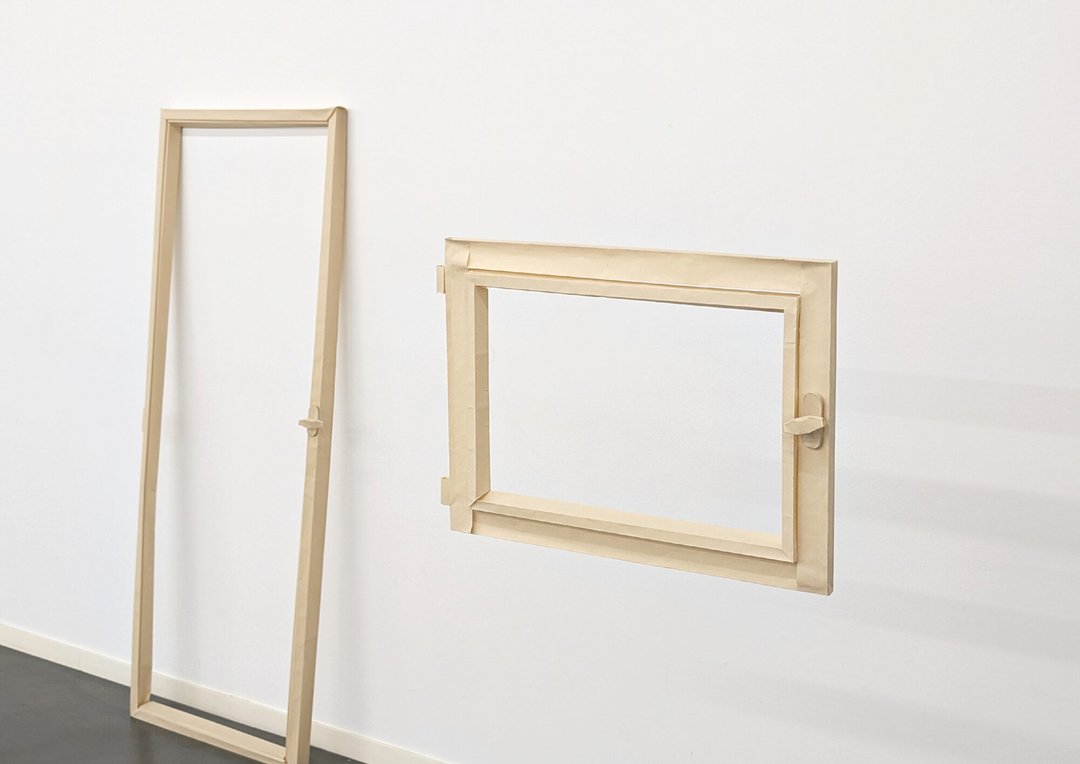
Mixing sound and sculpture, A strip of fruitful land of our own is an installation of three paper windows with dedicated texts that can be heard near them. Made out of delicate Xuan paper, the frail windows are a reproduction of the artist's home windows, brining his fragile perception into the space. The three texts, read in three different voices and coming from three different timelines, weave stories of displacement, war, desire and queerness, bringing a vision of the world to be seen and heard through these veil-thin Swiss windows. As the fragility of our perception of the world is constantly challenged by the stories we are told, now is the time to listen to them.
FINE ARTS
by Olive Godlee
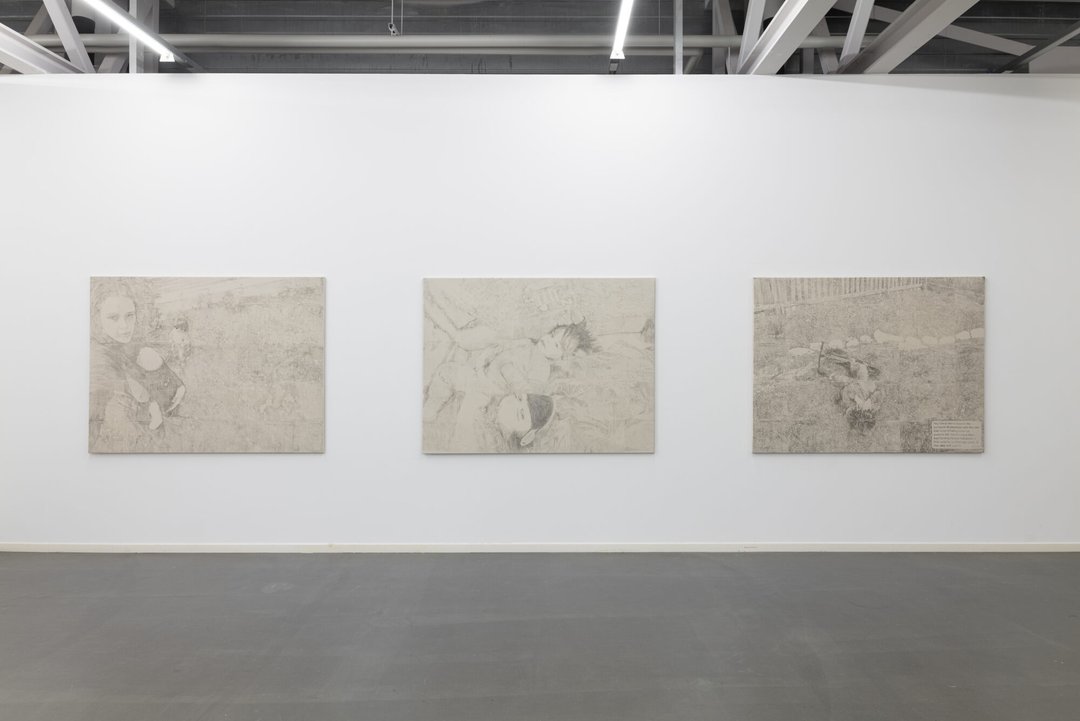
Me and Other People's Children is a triptych, made with graphite transferred onto raw canvas. The source images are photographs taken by the artist, with and of the children in their care. On the lower right appears a text message bubble, sent by the artist/nanny to the mother of the children. This piece is a continuation of a body of work that grapples with the triangulation of the nanny, the mother, and the child.
FINE ARTS
by Taleb Lachheb
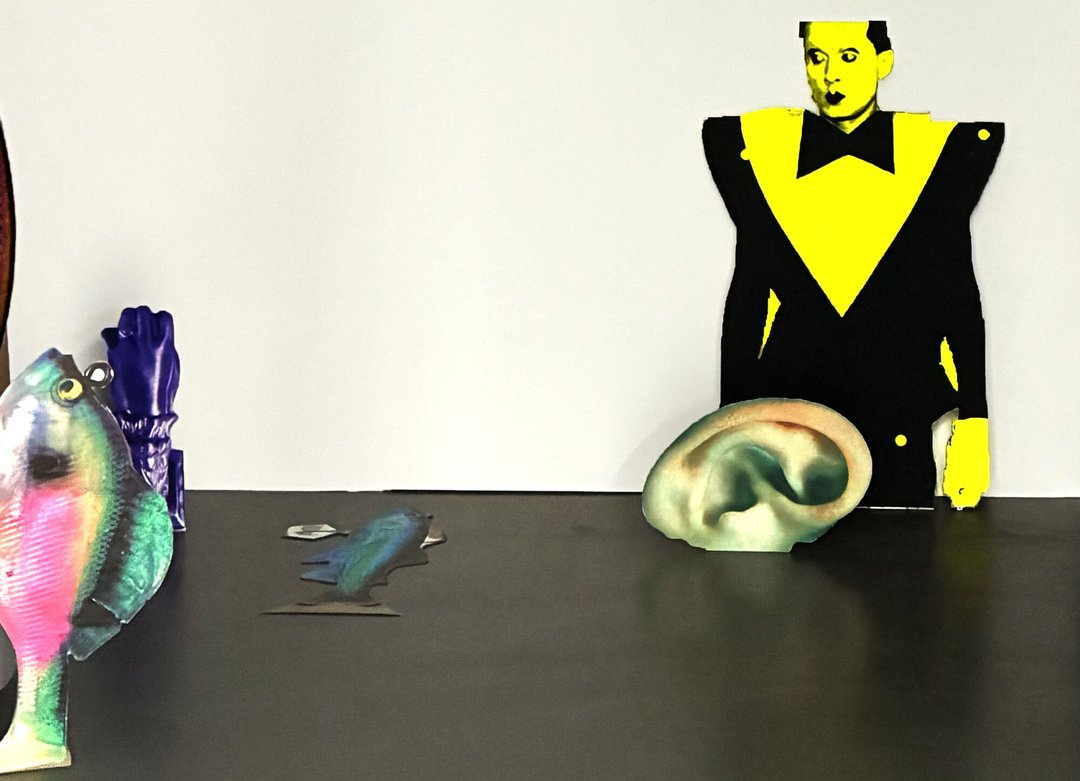
FRANCE FIST: EXPORAMA is an installation composed of cardboard sculptures and a text read through a speaker. This project treats language as an unstable material, eroded by performativity. Sentences produce unexpected connections between distant subjects, such as body, family, work, sexuality, society, future. Meaning is not demonstrative: it emerges through successive collisions and shifts. The whole work proposes a fragmentary reading, close to a "Paranoid Reading", where relations between elements remain unstable and paradoxical.
FINE ARTS
by Hugo Baud
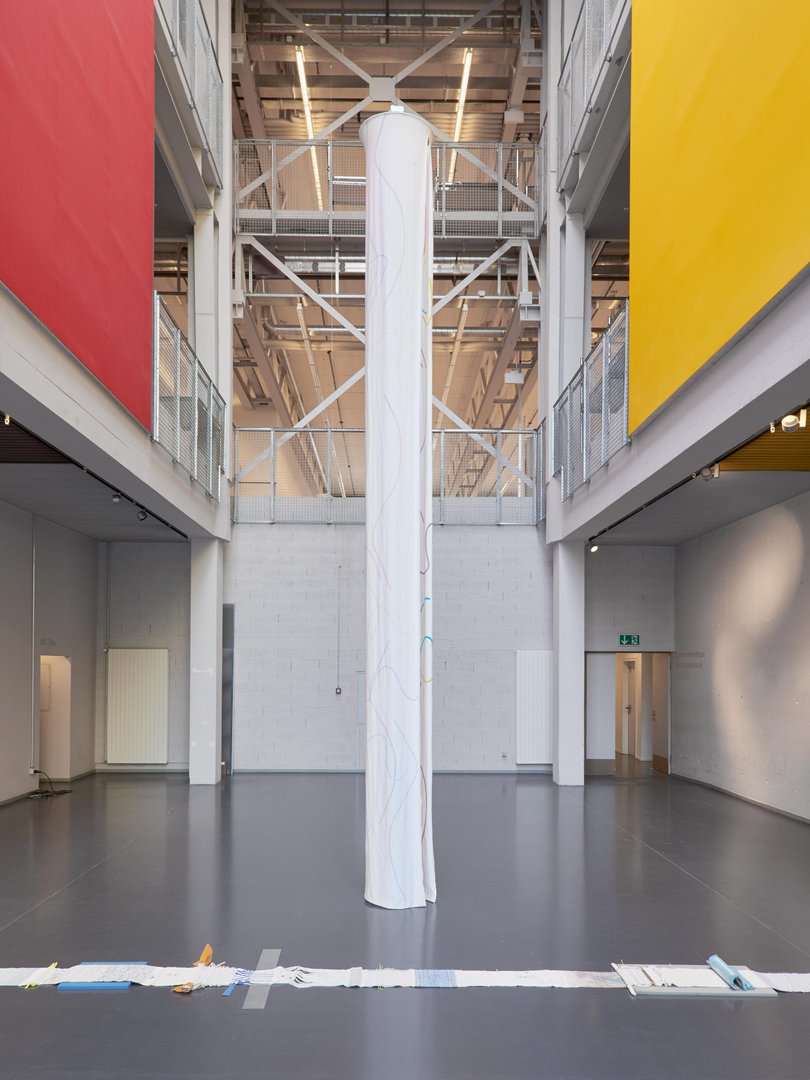
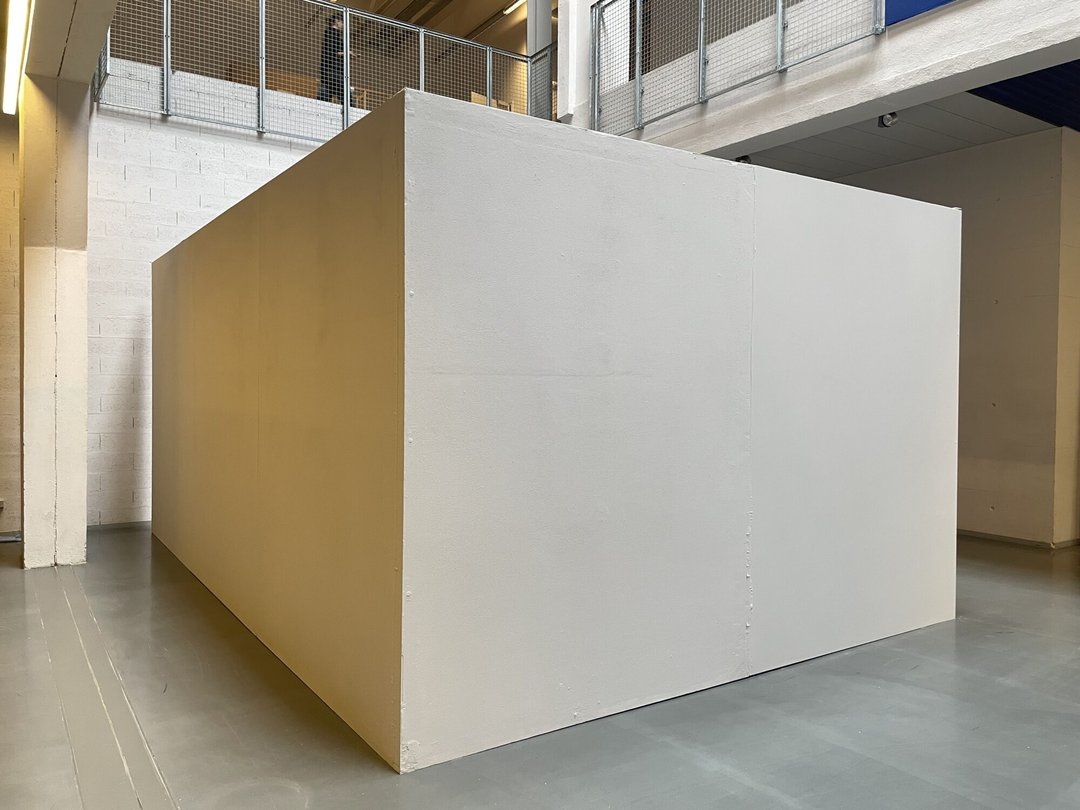
ALCOVE is an installation located in the ECAL lobby that invites a reflection on such an exhibition space. It consists of the school's display walls, each measuring 2.06m by 2.8 0m. The structure, which is 6.18 m long, 4.12 m wide, and 2.80 m high, forms a rectangle on the floor with an area of 25.46 m². The exterior of the structure is painted in S 1502-R, the official color of the building's walls, and the interior in RAL 9016, the color designated for exhibition spaces. The name ALCOVE echoes that of the iconic sofas in the ECAL entrance hall.
FINE ARTS
by Daniel Walcher
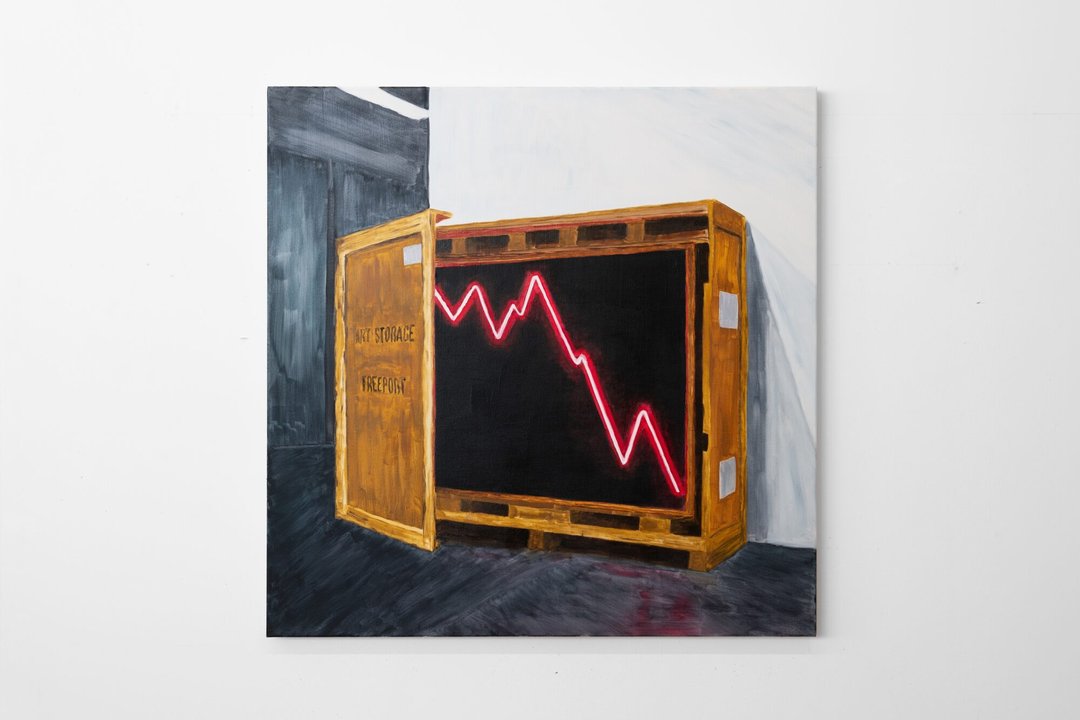
The physical heart of Familiar Structures is a series of four oil paintings depicting financial diagrams. The artist painted entire simulated environments — gallery walls, shipping crates — surrounding the works. These nested layers expose a mise en abyme where the physical painting permanently houses a simulated performance of its own exhibition space. The project anticipates its own "afterlife": being digitally documented, the physical canvases return to data and into the algorithmic networks from which they were derived. The "digital mirror" — an interactive network graph — allows viewers to trace the exact algorithmic data paths that materialized these structures. Hence, Familiar Structures, engages the invisible networks we inherit, operate within, and replicate.
Visual artist, Art critic, Curator, Art director, Teacher, Cultural mediator, Performer, Stage manager, Exhibition designer, Video artist…
(BA and MA Fine Arts) Alfredo Aceto, Valentin Carron, Claudia Comte, Sylvain Croci-Torti, Stéphane Dafflon, Philippe Decrauzat, Natacha Donzé, Cyprien Gaillard, Frédéric Gabioud, David Hominal, Gilles Furtwängler, Mélodie Mousset, Simon Paccaud, Gina Proenza, Jeanne-Salomé Rochat, Denis Savary, Baker Wardlaw, Shirin Yousefi...
Stéphanie Moisdon
Artistic Assistant
Shirin Yousefi
Academic Assistant
Lucas Aulagnier
Stéphanie Moisdon
Shahryar Nashat
Federico Nicolao
Shirin Yousefi
Mohammed Almusibli
Neil Beloufa
Nicolas Bourriaud
Dimitri de Preux
Gilles Furtwängler
Gabriele Garavaglia
Fabian Marti
Noémi Michel
Vincent Normand
Ken Okishii
Lydia Ourahmane
Bea Schlingelhoff
Mona Varichon
Sofia Al Maria
Mathis Altmann
Mohamed Amer Meziane
Kader Attia
Philippe Azoury
Paolo Baggi
Meriem Bennani
Vittorio Brodmann
Emanuele Coccia
David Douard
Gina Fischli
Tristan Garcia
Dominique Gonzalez Foerster
Marta Kirszenbaum
Gabriel Kuri
Ingrid Luquet-Gad
Mathew Lutz-Kinoy
Olivier Marboeuf
Diego Marcon
Mélanie Matranga
Valentin Noujaim
Sara Sadik
Albert Serra
Zoe Stillpass